Coin 0
Back

From friction to engagement: how I drove a 13x lift in core business action per user

Finding top-tier talent is a broken process.
CVs don't tell the whole story. The strongest signal of talent comes from the people who know exactly who the most brilliant individuals in their network are.

As the Founding Product Designer at getCredible, the talent discovery platform built entirely on peer recognition, my challenge was simple but tough: how do we convince users to continuously tell us who the best people in their network are?

getCredible | UK VC-backed startup

TL;DR: Talent referrals at scale.
getCredible lets people vote for the most talented individuals they know. These votes build real-time rankings that surface top performers inside each network. Top companies use these rankings to discover talent in the fastest and most reliable way possible.

Giving talent referrals is inherently boring. What started as a friction-heavy form to collect names became an addictive game-like poll that users actually enjoy. This shift took us from capturing 3 names to 40 data points per user, a 13x lift in the essential data our product relies on.

Here's how I designed that transformation.

Revolutionizing the core action: the game-like poll

The evolution of the product

1
The Google form

To test whether peer recognition could surface real talent, the first MVP in early 2022 was a simple Google Form where students wrote the top three classmates they believed were the best in their class. It spread quickly within a few university courses, but it couldn't grow beyond those tight groups.

That early traction exposed the core insight behind the entire product: people already know who the top performers in their network are, long before a CV or a recruiter does.

getCredible is built on that truth. These signals exist in people's minds. We just need an effective way to capture and aggregate them. The Google Form proved that ranking people based on peer votes worked. The strongest performers consistently emerged at the top.
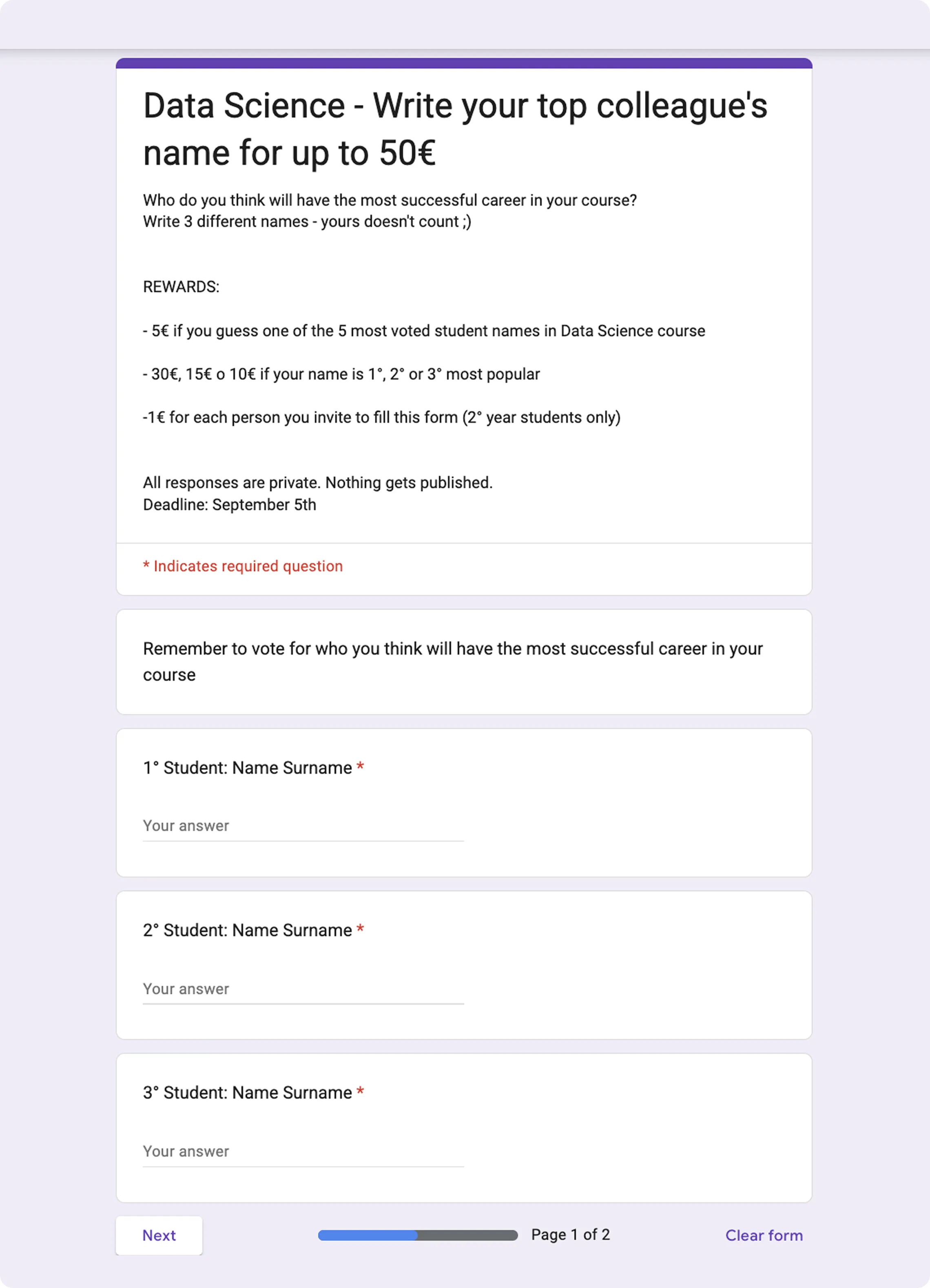
Google Form MVP

The first MVP: a Google Form collecting talent referrals from university students

2
The website

We then moved to a web app to expand beyond single classrooms and connect multiple networks.

Users still typed three names, but the experience had a clearer messaging, better design, stronger value proposition (job offers, leaderboards, rewards).

Still, a student may know 10~15 classmates, and the top 30% corresponds to only 3 votes. After casting those votes, the user had nothing more to contribute.

Even with a K-factor above 1 and early revenue, virality stayed locked inside each class.

One question became critical:

How do we scale the number of talent referrals per user?

To collect more names, we needed to cross the boundaries of those small courses networks.
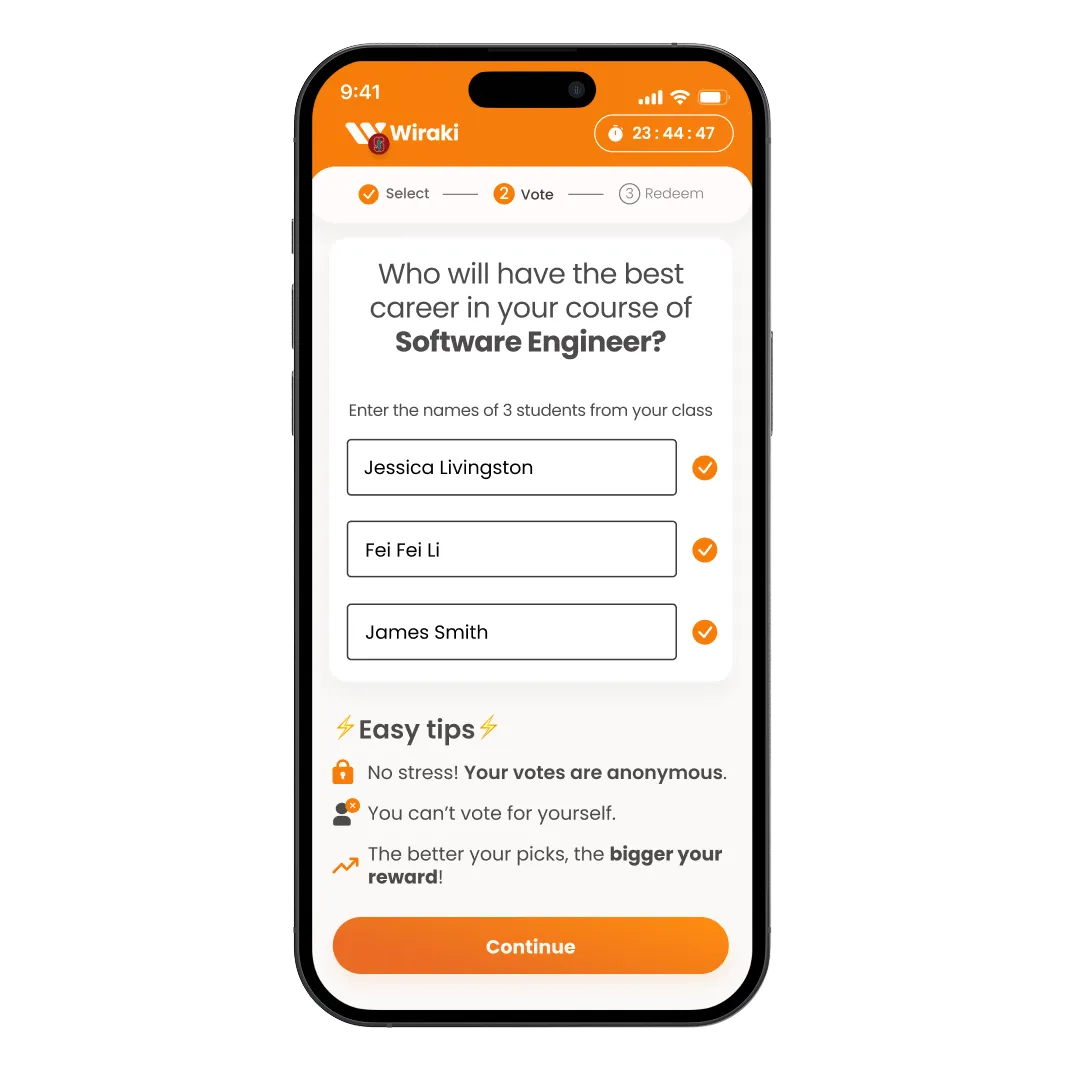
Mobile App Experience

First web app designed to leverage network effects

3
The first mobile app

Next, we moved to a mobile app where users could vote by searching their contacts, spanning both university and personal circles. The goal was to expand outside classrooms and activate broader networks. But the friction persisted. Users often did not have the number or surname of the person they wanted to vote for.

The mobile app changed the interface but not the effort required from users, and the core challenge of moving across networks was still unsolved.
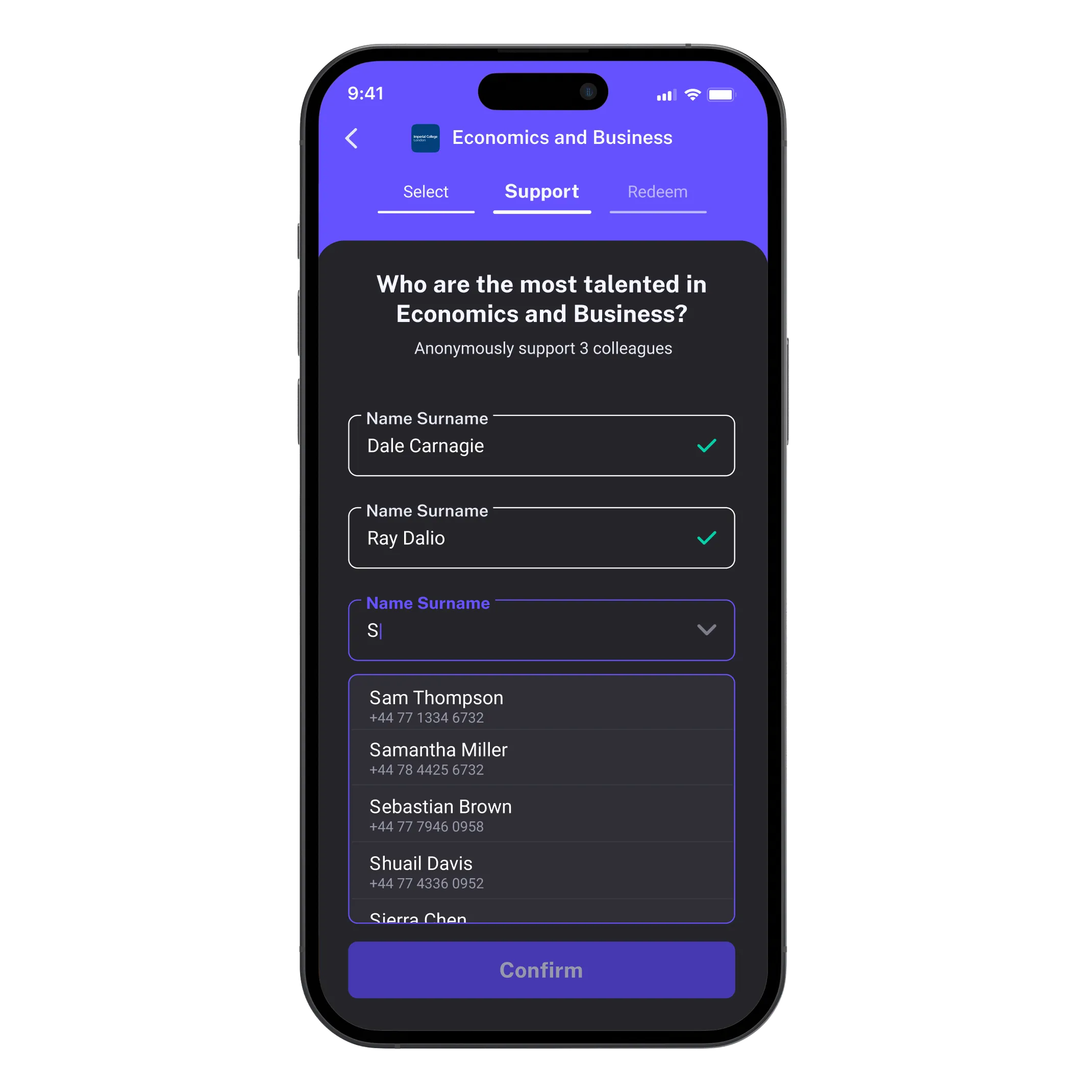
First Mobile App

First mobile app enabling voting through users'contact list
The hidden problem

Now take a moment and answer mentally: Which is your favourite song?

You might think of the song you've been listening to most lately. Then another one you loved for years comes to mind. You realise you don't actually have an immediate answer, even though the question is deeply personal.

Days later, while listening randomly, you'll come across a track that makes you think: "This one."

A question that seems simple hides several cognitive steps.

Why?

When you're asked to name your favourite song,your brain doesn't retrieve a label. It runs a process.

That process usually looks like this:

🎶 Favourite song

01

Understanding the context

You first interpret what "favourite" actually means.
Most listened to recently? Most emotionally meaningful? All-time favourite?

02

Framing the problem

Narrow the set of possibilities based on context.
A genre, a period of your life, a mood?

03

Maximising the objective function

Within that reduced set, you optimise for what matters most to you.
Emotional impact, frequency of listening, identity.

04

Communicating the output

Turn an internal preference into a concrete answer. You name the song.

Voting for top talent runs on the same cognitive process as deciding which is your favourite song.

When we ask someone to “vote for the best people they know,” they first interpret what “best” means in context. Best at what? Academic performance? A specific skill? Raw intelligence?

Then they define the search space. Which group of people am I choosing from?

At this point, they start comparing people and optimising for the objective of “Who stands out the most.”

And finally, they communicate the output by typing names and surnames, often guessing at best how to spell them correctly.

🎶 Favourite song

01

Understanding the context

Interpret what "favourite" actually means.
Most listened to recently? Most emotionally meaningful? All-time favourite?

02

Framing the problem

Narrow the set of possibilities based on context.
A genre, a period of your life, a mood?

03

Maximising the objective function

Within that reduced set, you optimise for what matters most to you.
Emotional impact, frequency of listening, nostalgia, identity.

04

Communicating the output

Turn an internal preference into a concrete answer.
You name the song.

🗳️ Voting for talent

01

Understanding the context

Interpret what “best” means in context.
Best at what? Academic performance? A specific skill? Raw intelligence?

02

Framing the problem

Narrow the set of people you're choosing from.
University, work, friends?

03

Maximising the objective function

Within that reduced set, you optimise for who stands out the most.
Skill, impact, reliability, performance.

04

Communicating the output

Turn an internal judgment into a concrete signal.
You type names and surnames, with uncertainty about how to spell them.

User interviews consistently reinforced this point. People loved the mission, but every time they had to type names, it felt heavy.

Which led to a simple, uncomfortable question:

How can we be asking users to do this much work as our core action?

Revolutionising the Core Action

The Hierarchy of Engagement

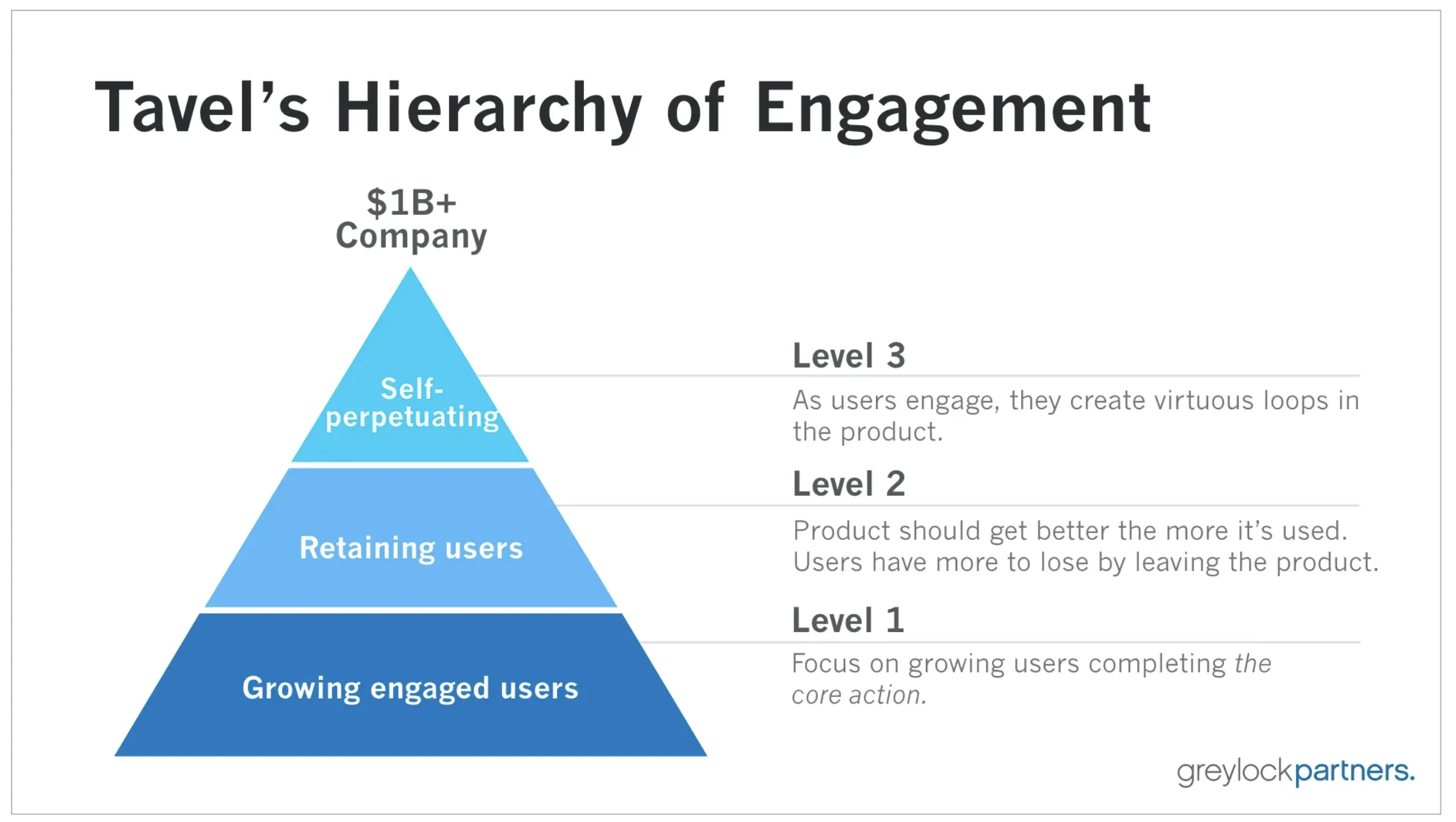
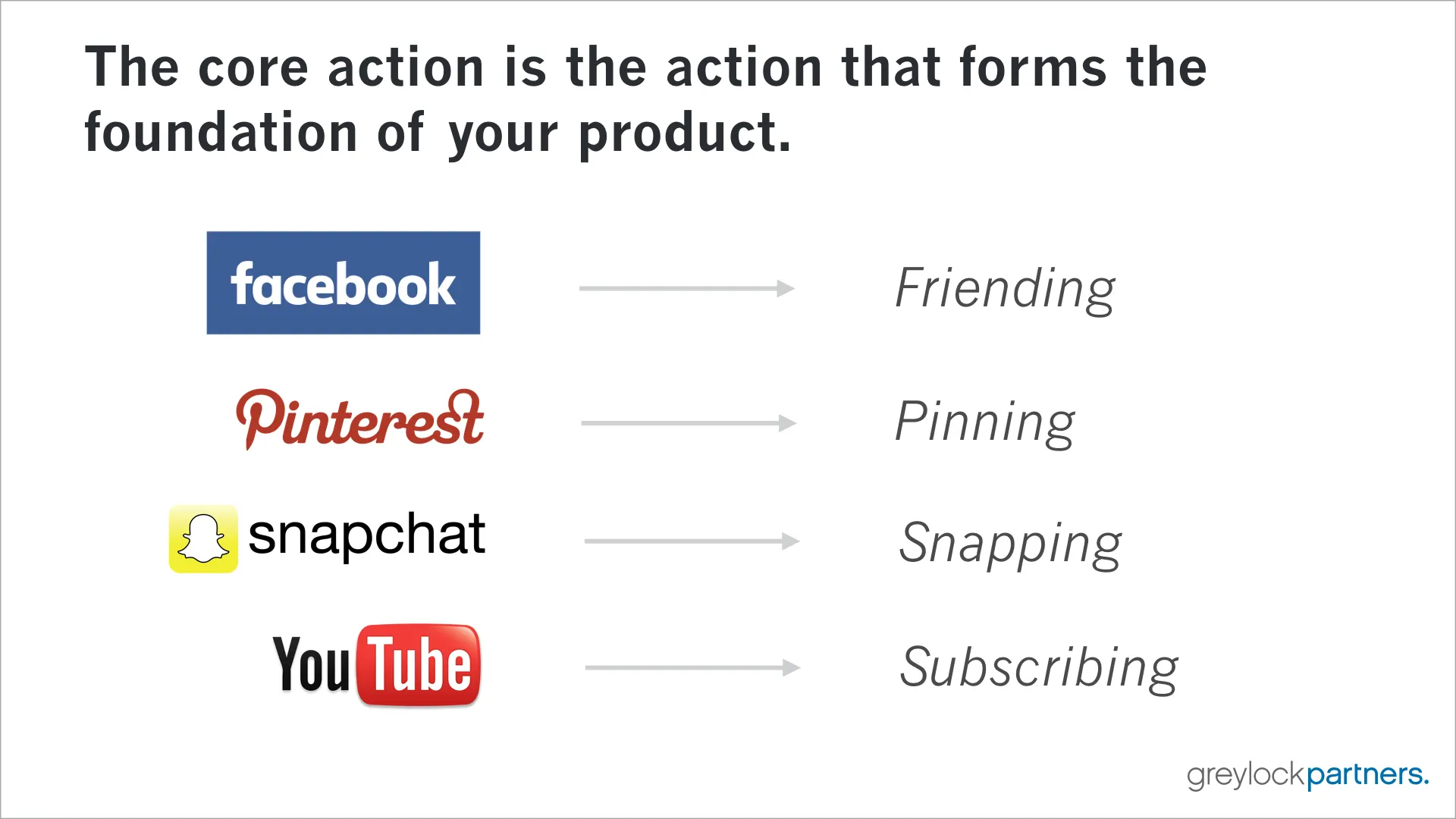
Every great product lives or dies by a single "core action", the atomic behavior that fuels the entire ecosystem. According to Sarah Tavel's Hierarchy of Engagement, this is the non-negotiable foundation of any consumer app. Facebook had friending. Pinterest had pinning.

Hierarchy of Engagement details

From Sarah Tavel's Hierarchy of Engagement article

Her framework breaks engagement into three levels, and Level 1 is the absolute prerequisite: users must perform the core action over and over.
But there's a catch. For an action to be repeatable, it has to feel almost effortless. The moment a user has to stop, think, or strategize to complete it, the engagement loop shatters. Every other product metric is irrelevant if you fail at Level 1.

Hierarchy of Engagement Level 1

From Sarah Tavel's Hierarchy of Engagement article

Our business model didn't rely on extreme user engagement to become a unicorn. Yet, this framework on engagement spoke directly to the main pain we had.

Another first principle that guided me was Steve Krug's golden rule of UX: Don't make me think. If you strip a referral down to its most basic, atomic action, what is it? It's a choice. The mandate became clear: Don't make them think. Make them choose.

Our team had been working hard on workarounds to offset the hassle of voting. I saw an opportunity to approach it differently.

I gained their trust by framing the redesign not just as a better user experience, but as an engine to capture vastly more data.

Don't think, choose!

What emerged was a stream of rapid, game-like polls generated from the user's own contact list. Inspired by the frictionless, viral mechanics of Nikita Bier's Gas app, each screen simply shows a small set of people. You tap the one you believe in. Next. Repeat.

The game-like poll

We engineered the experience to be intentionally playful and time-bound. Users had a maximum of 7 seconds to answer each poll, striking the perfect balance between urgency and comprehension. It gave them just enough time to scan the names (people read about 4-5 words per second) but not enough time to overthink it.

Poll time

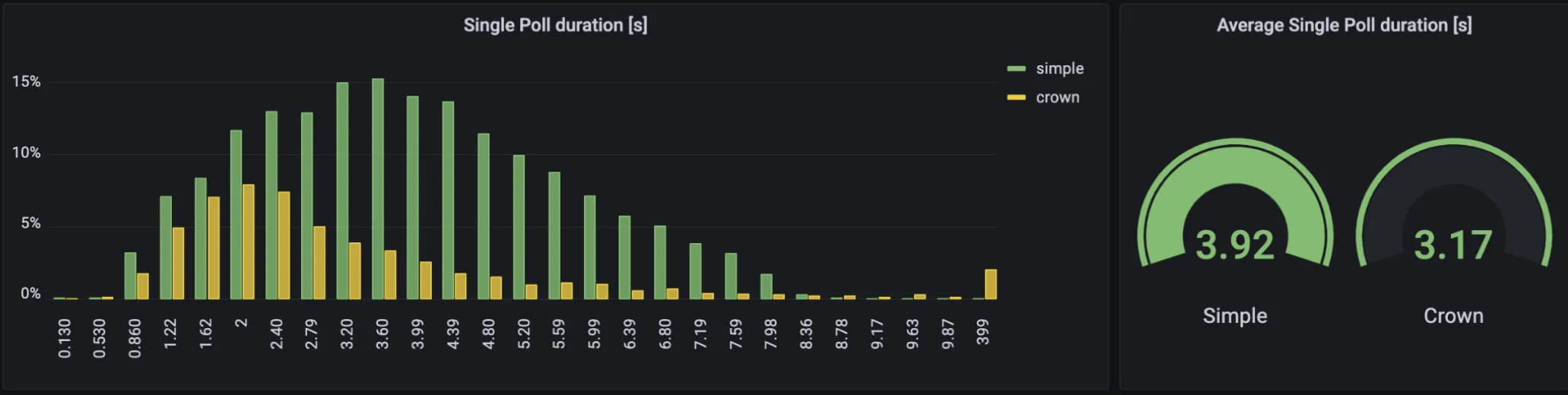
A single vote in a 1-vs-4 poll takes on average 4 seconds (simple) and 3 seconds (crown)

The reality was even faster: the average response time dropped to just 3.4 seconds per poll. We were collecting exponentially more votes with a fraction of the effort.

This design completely collapsed the original four-step decision process into a single, seamless operation:

  • Understanding the context: The question remains the same across every poll. Once the user understands it the first time, the context compounds.
  • Framing the problem: The app does the heavy lifting. Instead of searching their entire memory, the user only has to evaluate the small, pre-narrowed set of names right in front of them.
  • Maximising the objective function: The mental model shifts from heavy recall to recognise who stands out.
  • Communicating the output: The friction of remembering and typing out names with correct spelling is replaced by a single, effortless tap.
Cognitive Step Before After
01
Understanding the context

Interpret context

User has to figure out what "best" means every single time.

Interpreted repeatedly

Same question

The question stays the same for all polls.

Interpreted ONCE
02
Framing the problem

Recall peers' names

User mentally searches their entire contact list to define options.

Long cognitive load

Read 5 names

The app provides a pre-narrowed set automatically.

AUTOMATED
03
Maximising the objective

Deep thinking

Heavy analytical judgment ("Who is the absolute best?").

Cognitively heavy

Lightweight selection

Evaluate only the options on screen in 7 seconds.

GUT REACTION
04
Communicating the output

Typing Names

Remember spellings and manually type out full names.

Heavy friction

Just tap

Replaced by a single tap.

FRICTIONLESS

By atomizing a high-friction task into a sequence of micro-decisions, the heavy psychological wall came down. Cognitive load dropped to near zero.

The shift was explosive. The exact same users who previously dragged themselves to submit 3 names were suddenly generating an average of 40 votes per session. It was astonishing to watch the behavioral shift in real-time, as users continuously kept voting, hitting 50, 100, and even 200 times in a single sitting.

getCredible engagement engine

To keep users engaged loop after loop, we engineered a variable reward system. As Nir Eyal explains in Hooked, variability prevents users from mentally anticipating the outcome, naturally sustaining their curiosity and mitigating fatigue.

“Without variability we are like children in that once we figure out what will happen next, we become less excited by the experience. To hold our attention, products must have an ongoing degree of novelty.”
― Nir Eyal, Hooked: How to Build Habit-Forming Products

Each time a user tapped on a name, they secured an average of ~250€ in potential future earnings (triggered if the selected talent was eventually hired). We used a randomized function to oscillate the exact amount around this average, ensuring the reward was always an unpredictable, positive surprise. We enhanced this system with a "crown vote" feature, allowing users to pick the overall best from the winners of their previous rounds, adding another layer of variable reward.

The game-like poll

However, we quickly discovered that the primary reward wasn't financial, it was emotional. The novelty of seeing familiar names and faces from their own synced contact lists surface in these polls was inherently engaging.

“Reducing the thinking required to take the next action increases the likelihood of the desired behavior occurring unconsciously.”
― Nir Eyal, Hooked: How to Build Habit-Forming Products

Outcome

The combination of practical, variable cash incentives and the emotional delight of voting for friends and colleagues created a highly repeatable experience. The average number of votes soared to 40 per user, 13x more than the 3 votes per user in the original flow, with some power users casting as many as 250 votes after syncing contact lists of 4,000+ people.

Average votes per voter

3 Before
13x
40 After

Average votes per user: 30 simple votes, ~10 crown votes, for a total of 40 votes per user

The result was a powerful data flywheel that amplified itself: more votes led to deeper data, which made our matching algorithm smarter. The smarter the algorithm became, the more relevant and engaging the polls were for users, creating a virtuous cycle that drove exponential growth.

What I took away

Lessons Learned

  • Challenge foundational assumptions, including parts of the product that sit at the base of the business and that everyone considered fixed.
  • What means to lead teams, founders included, through disruptive change by framing counterintuitive ideas with clarity, and evidence that creates alignment.
  • Shape product direction, not just execute against it, moving from responding to defined problems to deciding which problems are worth solving.

Product design geek?

If product design, UX, consumer and social apps gets you excited, drop me a line. DM me on X (@VandEffe) or email valentina.vf.ferretti@gmail.com.

Let's connect and talk shop!